 Case Study: Reclaiming Theatrical Distribution for Truly Independent Films
Independent filmmaking has never been more accessible, or more overwhelming. With streaming platforms saturated and traditional distribution pathways shrinking, truly independent films face an uphill battle to stand out. This case study explores an alternative model: reclaiming theatrical exhibition through grassroots, filmmaker-driven strategies. Drawing from the 18 city release of Breakup Season in 2024, director H. Nelson Tracey outlines how modern indies can build their own theatrical runs, engage audiences directly, and create sustainable momentum beyond relying on film festivals or Video on Demand.
 Introduction
Making independent movies in the 2020s is the ultimate paradox: on the one hand it’s never been easier to make a feature film and get it widely available across the entire Internet. On the other hand, this oversaturation has made for a very crowded landscape to launch a film, particularly a truly independent one.
In my previous blog post, I spoke in depth about film festivals and how to maximize this platform for your indie movie, particularly without the lift of a top-tier film festival like Sundance. Now, it’s time to talk about what happens next for indie feature films. Releasing movies is a lengthy topic, so brace yourself for a deep dive. This is the third (and final… for now) blog post detailing the process of making an indie film in the current landscape.
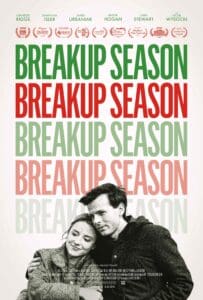 Earlier posts (Making Indie Movies in Oregon; Navigating the FIlm Festival Circuit)
In a very crowded landscape, it’s never been harder for a new indie movie to find footing against the glut of competition on the internet. Despite some recent pessimism surrounding the future of the in-person theatrical experience, for many indie movies, a theatrical release may actually be a more productive vessel to get your work first seen and bring about success than starting by putting a film onto VOD (video on demand). Despite what you may initially think, it’s not out of reach for any budget level. The goal by the end of this article is to demystify the theatrical process, and understand that while it’s much harder to secure a theatrical release than to get your film available online, in the current indie landscape, it has the potential to be more rewarding, both on a creative and financial level.
 Part 1: The D Word Fallacy
Before I made my first feature, I had in my head the fairytale idea of the indie film release process. First you make a (hopefully great) movie. Then you get into a (hopefully great) film festival. Then you get acquired for (any kind of) distribution.
Distribution. The almighty word at the tip of every filmmaker’s tongue. Because of the widely known success stories about Sundance in the 1990s and 2000s, I believed wholeheartedly that this was still the primary model for how indie films got released. But with a less than 1% acceptance rate 99% of feature films made every year have to find their audiences without the boost of a major festival. Heck, not even Sundance guarantees a lift anymore. What it means in practice is that at all of the regional film festivals, you have dozens of filmmakers trying to figure out how the heck to get their movie out there.
 Most filmmakers (including myself) learn the process of making movies, but then have zero idea what it entails releasing a movie. This allows gatekeepers to know something that you don’t, and forces the filmmaker to pay the toll to enter the market. In practice, it’s a bad model that wouldn’t pass any other business. Imagine making a very expensive product without any idea of how to sell it. That’s what most of the indie film world is. Because nowadays the majority of movie viewing is done via at-home platforms like Netflix or Amazon, there’s a notion that that’s the only place where money is made. There are a slew of distributors out there who serve as intermediaries to getting your film available and widely seen online after you’ve finished with film festivals. But margins are poor (even for ad-supported content), and few will pay for your product in any way that resembles the fairytales of indie film I grew up on. Just like how streaming music online had a devastating effect on the music industry, the streaming era combined with the pandemic delivered a similar devastation to anything left of the traditional movie release model, and we’re all still picking up the pieces from it. It’s a grim landscape, but indie film was never for the weak spirited. If you aren’t deterred, welcome to what producer Ted Hope calls “a terrible business, but a wonderful life.”
Many filmmakers have unrealistic ideas that these distribution companies know how to get rich on indie movies. It’s practically free to listen to or watch anything, so why would a consumer pay for it? How do you get a consumer to pay for something online when they already have paid subscriptions to better known media?
My educated guess is that the only way the indie distributors make money is by sheer volume. Therefore, they need to release dozens of movies a year to survive, which only contributes to more filmmakers competing for the same few oversaturated eyeballs. Which brings up my biggest take on VOD.
When you release a movie onto Video on Demand anywhere online, in today’s landscape, you are competing against every single other movie ever made. You are asking the viewers to sift through thousands of available titles, including their all-time favorite movies and shows, and somehow, land upon your indie film. That is a tall ask.
So let’s flip this around, because this is extremely important. If you’re reading this article, you probably want people to take time and watch your movie. But ask yourself: when was the last time you watched a truly indie movie where you didn’t know anyone involved in making it? Specifically, when was the last time you chose to stream an indie movie at home as your evening entertainment?
I bring this up because many (though definitely not all) filmmakers I meet work on getting their own movies out there, but don’t actually take the time to watch their peers’ indie movies. I’m not talking about Anora or Moonlight. I’m talking about the indie movies at the scale that they themselves have made. So if you’ve chosen to read this article, I encourage you to seek out and watch truly indie movies regularly. Watch plenty of them. You’ll learn a ton, and you’ll directly support your contemporaries in this pursuit. And here’s my favorite part: 9 out of 10 times, you can actually find the filmmaker’s contact information online and email them questions about how they made and released their movie.
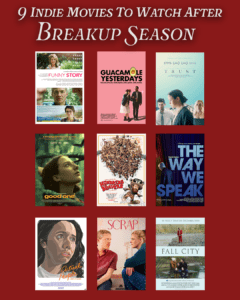 Earlier this year I highlighted 9 very good truly indie movies to watch on my film’s instagram page, here they are in alphabetical order:
- Actual People
- A Fall City Christmas
- Funny Story
- Good One
- Guacamole Yesterdays
- Hundreds of Beavers
- Scrap
- Trust
- The Way We Speak (also made in Oregon)
And I’ll also shoutout my own film, Breakup Season, which is available to stream on Amazon and Tubi, and also recently got a DVD release with bonus features including deleted scenes and a director’s commentary.
The point of this extended context and recommendation list is that VOD and streaming is in a place where there’s a glut of content, a lack of clear marketing, and very limited financial returns. It’s not the golden parachute you’re looking for. It is the finish line, yes, but if you plop your movie onto these platforms without any further notice, you’re skipping a step with a lot of great potential.
The myth that “theatrical is dead” is a symptom of cinemas struggling post-pandemic, and Hollywood failing to keep up with consumer trends. And yes, it’s an unfortunate reality that we’re far gone from the heyday of the theatrical experience.
But you are not Hollywood. If you want to be an indie filmmaker today, you have to stop playing the way they tell you to. And so it’s time to take the matter into your own hands and at a local scale.
 Part 2: Pros and Cons
Here are the quick benefits of doing a theatrical release of any duration:
- Clout: For all consumers, a theatrical footprint instantly raises the profile if you can verifiably say that your film played in theaters. It’s an instant legitimizer. This matters to your audience, the press, and your cast/crew. All of these tides rise with theatrical.
- Experience: Have you ever worked really hard on a project, only to release it online and feel a little shortchanged refreshing the view count for a little dopamine? Movies originated as a shared experience, and there’s nothing better than seeing your movie together with an audience who have no idea what they’re going to witness. It’s the ultimate reward for years of hard work. You can do this with film festivals, but there’s something immensely satisfying about a theatrical experience dedicated to your film, and you have far more control over the situation than you would at a festival.
- Engagement: At the indie level, knowing your audience is everything. If you release a movie online first, you usually have no idea who is actually watching it. When you release it in theaters, you can actively track how many people have seen it, and if you’re in person, you can actually know who is there. Plus, you will have the audience’s undivided attention, which you can hardly guarantee from at-home viewing.
- Tangibility: In-person exhibition has a transparency that few platforms online can replicate. You know how many people bought tickets, and you have terms laid out with the exhibitor to how money is divided. It’s way more trustworthy and auditable. And that feels like a spark of joy in the current landscape.
 Here are the challenges you have to be ready for:
- Marketing: Just like VOD releases, you are competing for people’s time. It’s on you to get people into theaters to see your movie. You’re an indie, and you’re competing against the big ones. But… I believe it may be easier to market in-person than online, and I’ll get to that in a second. The point though, is you do have to be prepared for a heavy marketing lift on your end.
- Booking Venues: A theatrical release requires contacting venues, securing dates, and establishing terms. It’s work. You can do it yourself, but you may have more luck with a dedicated theater booker. Either have pros and cons and associated costs. You have to be prepared for a lot of legwork in getting things set up.
- Brace for Immediate Rejection: Have you ever worked on a project, released it online, told a friend about it, and they say “oh I’ll check it out” and never do? Have you ever recommended a movie and they say they might “try” and see it? You always have this sliver of chance they may do it, and so you don’t have to grapple with true rejection. When you invite someone to a theatrical screening, they either come or they don’t. You have to be prepared for many people to not show up. BUT the ones who do… it will mean the world and you’ll never forget it. This outweighs those who don’t come.
As far as I can tell, the cons listed here are all things you have to deal with when releasing a movie on VOD anyway. It’s a lot of work. But so is making a movie, and you did that already. Why sell yourself short when with a bit more work, you can give your film the launch that it deserves?
Part 3: Breakup Season Case Study (plus: the 3 types of theatrical bookings)
The only way I know how to tell this story is in detail. My hope with this section is to demystify the process. I hope you can find some takeaways and apply them to your own projects.
Breakup Season made its way into existence thanks to deadlines. First: we had to get the film shot before the snow melted in February 2023. Delays were not an option, we could not miss the winter window. Then, we had a post-production deadline: the only thing Sundance ever gave this film was a great finishing deadline: September 2023. After rejections from the big festivals we completely revamped our festival strategy and hit the ground running at the Desertscape Film Festival in March 2024. Then came the relevant deadline: this is a Christmas movie. Therefore, no matter what, we were getting the film out there by December 2024. On December 11th — National Breakup Day — I knew that the film had to be widely available as a finish line to the festival and promotion process.
From our first film festival, I confirmed this was a film that connected with audiences. This was further affirmed by seeing the film in audiences of complete strangers at later festivals. With that confidence, I felt emboldened to attend as many festivals as I plausbily could, knowing that the film was suited for the theatrical experience.
It was just as important to me that I gave everyone involved a “hometown premiere.” I strategized submitting to festivals where we knew we could generate a crowd. However, not every hometown of an actor or key crew has a festival. And with festivals, you are at the mercy of their selection and when in the year they’re held.
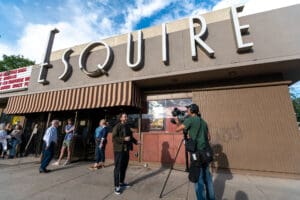 The reality came to a head when I found out that Denver’s Esquire Theatre, the 97-year-old independent cinema just 6 blocks from my childhood home, was closing for good in July 2024. A campaign launched to save it, but as the months ticked by, it became clear this was a done deal. Another sanctuary of cinema lost to history. Denver is my one & only hometown. It’s where my parents (and 92-year-old grandmother) still reside. Knowing this would likely be my last chance to play at the Esquire, I took matters into my own hands.
There are three ways to exhibit a movie at a theater: theatrical booking, a licensing deal, or a venue rental.
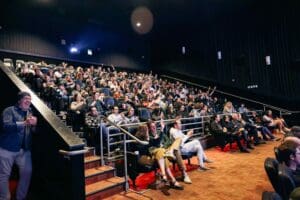 Theatrical Booking is the most traditional theatrical method: a theatre decides to program a movie because they think it’s something that can appeal to their audiences. Majority of the time, this is going to be what Hollywood studios send their way. Even within that, they have choices, particularly at independent cinemas. If a particular movie is doing well, they can add more screenings or hold it over another week. Theaters have revenue agreements with distributors, which ballpark around a 50/50 split. It can be more complicated, but quite simply there’s a form of revenue split between the venue and the film team. Nobody usually has to pay either party up front, an agreement is signed and both walk away with their respective percentage of the gross. Sometimes, the terms favor the venue, sometimes they favor the distributor, it can vary. If you’ve ever heard anyone say “theaters make their money from concessions,” it’s because those items aren’t split with the distributor (so yeah, buy that drink or popcorn at your indie cinema).
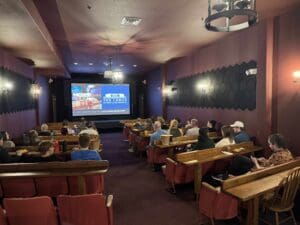 A Licensing Deal is the safest bet for filmmakers, but also the most elusive. This is where a venue requests to screen a movie, and is willing to pay up front for the ability to do so. In this case, the filmmakers can charge a fee and negotiate terms with the exhibitor. It can be for one-night-only, a limited engagement — all of this is laid out in the agreement. This is not very common for traditional movie theaters, but is very common for alternative venues, such as: libraries, universities, places of worship, you name it. This is the backbone of most non-fiction films’ releases, and also not elusive for narrative films.
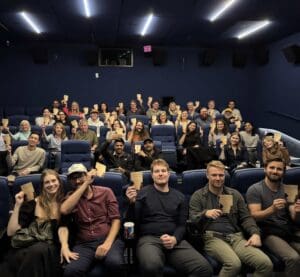 A Venue Rental is exactly what it sounds like: instead of a revenue split, the distributor (or filmmaker) rents the space for an up-front lump sum and agreed terms. This permits the theater to be more flexible because they’re guaranteed the rental fee. The theater avoids risk by charging up front and has a guaranteed lump sum on top of any concessions. The filmmaker then has complete control of the further outcome: if the filmmaker charges tickets and can pack the house, the revenue can far exceed what a 50/50 split or licensing deal would entail. But this requires the filmmaker to do the heavy marketing lift, so is best reserved for theatrical events where you feel confident you can bring an audience.
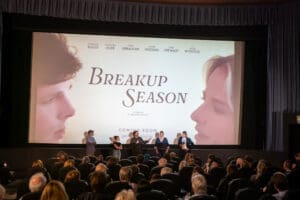
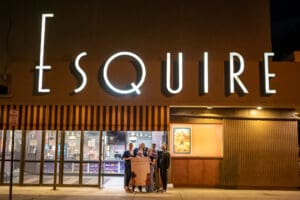 Now back to Breakup Season: it’s May 2024. Denver’s Esquire Theatre is closing in July. I was not going to miss my only chance to screen a movie I directed there. I contacted the theater directly, and after a few back/forths with the parent company, we landed on a 1-night-only venue rental: Wednesday June 19th, 2024. We had 1 month to market it and bring in audiences.
And that’s exactly what we did. We mailed the check and booked it. Because it was a rental, we did our ticketing on our own via the ticketing platform Eventive — that’s allowed for rentals. It was time to get to work: what followed was an all-hands-on-deck effort to bring out the masses for a very special evening at the Esquire. We had 227 seats to fill, and by golly, we were going to have ourselves a sold out show.
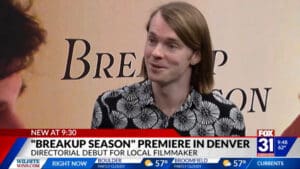 Originally I envisioned hiring a publicist for this event. But what I found was that the publicist costs would be best saved for further down the line when we did our digital release. So I did it the old fashioned way: I looked up local news outlets in Denver, put together a press release and a short email about the event, and by the time it was all done, I’d generated about half a dozen articles to the tune of “filmmaker hosts hometown premiere at the historic Esquire.” I even got to be on TV! By the time some of the stories ran, we’d already made major progress in sales via family and friends and word-of-mouth. Again, this was a hometown advantage: other cities I didn’t have this to lean on. For indie movies, this is where effort should be concentrated, in places where there’s built-in potential. My biggest takeaway from doing theatrical: the only cities where we made a profit had an in-person component — a Q&A with a cast member or crew. This eventized the screenings. It wasn’t just seeing a movie: it was directly engaging with one. Just like a film festival, except built from the ground up.
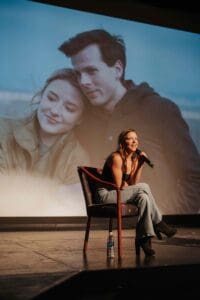
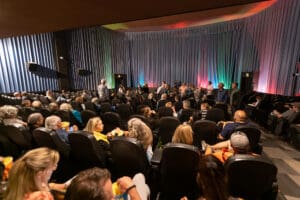
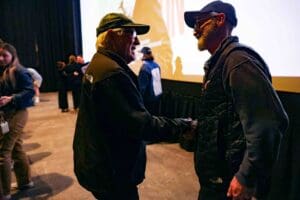
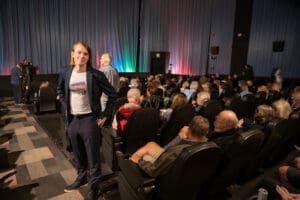
The night at the Esquire was the stuff of magic. (I made this video highlight reel of the event). A blockbuster line around the exterior. Cast and crew meeting my family including my 92-year-old grandmother and 96-year-old great-aunt. Actress Carly Stewart’s 91-year-old great-aunt in tow also. And the audience response: electric. Laughter, tears, big emotions. Movie magic. One of the best nights of my life.
All-in, even after factoring in costs, we did make some money that evening. Not enough to fund a movie, but enough to be excited about in-person events. The experience was priceless, but it also showed us something deeply valuable: people do crave in-person functions, but they need to be convinced it’s worth their time. The Esquire was the perfect storm: it was a “one-night-only” event (scarcity) with an in-person Q&A with actors & filmmakers (exclusivity). People will go out of their way for something special.
But there’s a ceiling here: I can bring a crowd to a one-night-only event in my hometown, but is that enough to call itself a “theatrical release”? No. But it did give me affirmation that Breakup Season was a “movie theater movie” and I knew this was going to be vital to our rollout beyond just festival acceptances.
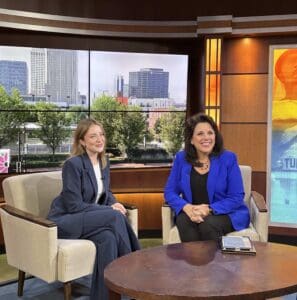 Enter the Circle Cinema Film Festival. Because our lead actress Samantha Isler was proudly from Tulsa, I was intent on finding us a film festival in Tulsa. Circle Cinema is unique for two reasons: first, it’s only for films made in Oklahoma or by Oklahoman filmmakers. I emailed the festival to ask if we qualified, and yes, because Samantha was still an Oklahoma resident, we did! Secondly, Circle Cinema Film Festival is one of the very few film festivals run by a movie theater. It’s run by fantastic people for whom the festival is just one of many year-round events at the beloved cinema. Therefore, their marketing infrastructure is abundantly stronger than a typical film festival.
The festival programming team loved Breakup Season. They were ecstatic to see Samantha’s lead performance, and more than ready to give her the full “hometown hero” treatment. Building off the Esquire, I knew great marketing relied on a combination of Samantha’s community showing up, and ample local press & media. The festival joined in, alongside Samantha, and we had ourselves another sold out crowd. Samantha got her hometown hero moment in spades.
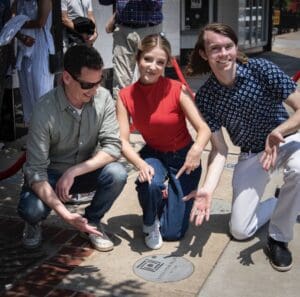
But here’s where it gets really exciting. As the credits rolled and the audience applauded, Circle Cinema owner/operator Clark Weins shook my hand and said “you are welcome at my cinema any movie, any time!” We had ourselves a hit with the Tulsa crowd and we both couldn’t be happier.
I was ready to take up Clark’s offer. We knew this was a holiday movie, and it was only July: why not bring it back before Christmas? In the weeks to come, we settled on a 1-week theatrical engagement (not a rental, a booking!) starting Friday, November 15th. Ample time for us to do theatrical ahead of a December VOD release.
We had ourselves a week in Tulsa. This was the foundation we needed to then expand our theatrical footprint, even without our VOD distribution in place yet.
Next up: Los Angeles. For one thing, we hadn’t played a single festival in LA. For another, it’s Los Angeles. We couldn’t do a theatrical release without LA.
At this point, we actually shopped around for a Theatrical Booker. I figured it would be money well spent to find someone who had inroads with cinemas. Like every step of distributing an indie movie, this didn’t completely exonerate our team of responsibilities associated with promotion, and truth be told, many of our bookings still came from our own direct outreaches like Tulsa and Denver. But a theater booker gave us a greater feeling of organization which would allow us to expand the footprint further with some more experience.
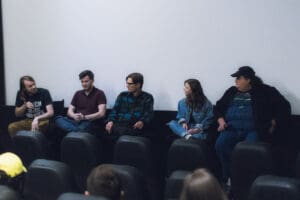 First and foremost was Los Angeles. We stuck with our November 15th date mostly based on giving us a 3-4 week window before our eventual VOD at-home release. The Laemmle Theater chain is the most indie film friendly theater group in all of Los Angeles. They’re used to it: many films dream of qualifying for Oscars and in order to do so, need to book at least 1 week in LA. So they were prepared for us. We worked out to have our premiere at the Laemmle North Hollywood, and then 7 days at the Laemmle Glendale.
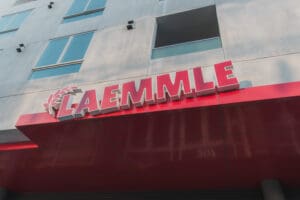 The reality check here is that as an indie, we were far from getting first dibs on optimal times. Besides our premiere night, we were allotted 1 time slot per day: at 4:20pm. Great for a Saturday and Sunday, tough for Monday to Thursday. Therefore, we adjusted our contract to get one additional evening slot: Wednesday night. It meant we had to give the theater a more favorable term (everything is a negotiation) but I knew we could have better luck marketing a Wednesday night, and that was certainly true. This is all part of the process of booking.
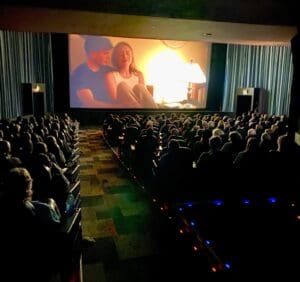
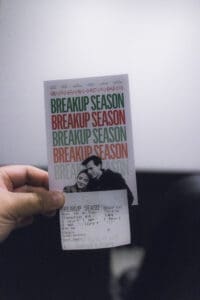 Los Angeles was a success: we put our primary marketing emphasis on the screenings we thought we could do well in. We sold out our Thursday night premiere, and did well in our Saturday and Wednesday showings. I went to every screening minus one (I went to our San Jose premiere that Sunday). Even our lightly attended matinee screenings turned out to be interesting and fun. This was the reward for all the work it took: direct engagement with audiences for over a week.
In the end, we did an 18-city theatrical release in 2024, with a mixture of all 3 types of bookings: theatrical bookings (the most common), licensing deal (just a couple), and venue rentals (only in cases where we felt confident we could outsell the rate and do better business than a 50/50 would give us).
Here were the notable successes and failures:
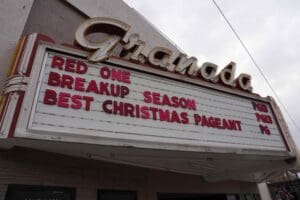 La Grande, Oregon: this is the town where we shot the movie, so we again had the hometown advantage. We booked a weeklong engagement at the local cinema. I’m incredibly proud to say it was so successful, they held us over for a 2nd week and removed screenings of Wicked to accomodate us. I’m so proud of that.
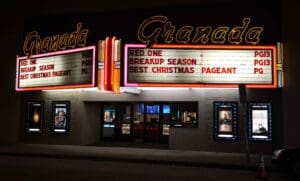 La Grande, Oregon (part II!): Hot Lake Lodge is a historic luxury hotel just outside the city. The hotel has a movie theater, and reached out about screening us as part of their Christmas movies. With them, it was a bona fide licensing deal, another hometown bonus. Better yet: we renewed this for 2025, hoping to establish an annual holiday tradition in La Grande.
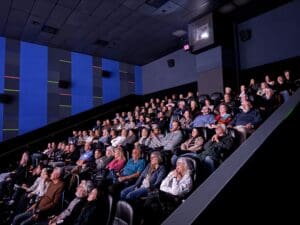 San Jose, CA: we found the Bay Area challenging to find venues, but my producer was from San Jose so knew we had to do something there. The Cinelux theaters gave us a 1-night-only slot, which we promptly sold out, and then they gave us an encore night, which was only lightly attended but still not nothing.
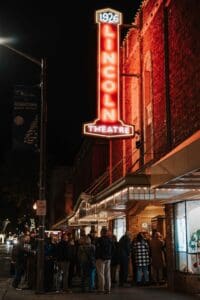
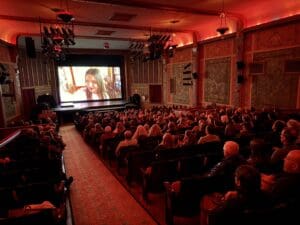 Mount Vernon, WA: actress Carly Stewart’s hometown (see the trend?). The historic Lincoln theater gave us 2 nights, and we had their biggest turnout since Barbie. It was a huge success and an amazing pair of nights. And like La Grande, we renewed our booking for 1 night in 2025, with the intent of building a holiday tradition.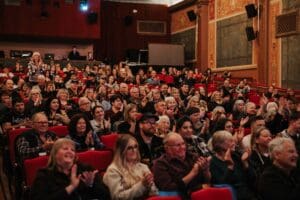
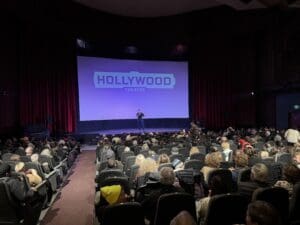
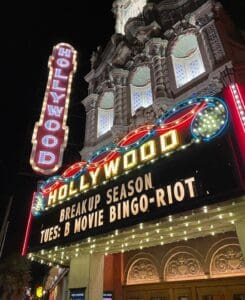
Portland, Oregon: the hometown for actress Brook Hogan as well as the majority of our crew. Had the backing of Oregon Film at the historic Hollywood Theater. One-night-only. Sold out. Q&A with a local critic and key cast/crew. Textbook perfect.
East Coast: By now you’ve heard only the good stuff, but here’s where it didn’t go as well – we booked 3 cinemas on the east coast. All independent. But we had little ability to market there, and did dismal numbers. Our December window was finite, and our team could only be in one place at a time. So for these cinemas, we didn’t have the success stories we’d hoped for. The lesson for me was to focus on in-person components for all the screenings at this indie level. As I rise up, I hope to not require that, but for my first rodeo, this was essential.
 Part 4: So How Do You Do It?
Here’s the step-by-step:
- Develop Your Schedule (this should include VOD) Before any outreach, figure out for your project what the timetable is going to be. Mark out where you want your theatrical release and your VOD release, that way you can approach the theaters with structure. Do research on what else is happening at that time, and check the availability of your team. Every movie is different, all of them should take time to do this step before anything else.
- Theater Booker or Self-Guided Choices I am glad I went with a theatrical booker to help myself not get overwhelmed with managing 18 theaters concurrently (on top of reaching out to dozens more prospective ones). The best theater bookers are excited about your movie and can actively lobby to get it places. You can directly reach out to cinemas, it’ll save you money, but require much more work on your end, and higher risk of rejection as there’s less credibility. Make this decision and begin the outreach process.
- Outreach and Agreements You and/or the booker will reach out to probably hundreds of locations. It’s like submitting to festivals: expect mostly rejections. But for cities where there’s mutual potential and some form of hometown advantage or built-in interest, you’ll do well. This process goes on for a few weeks, and with each theater, you’ll draft terms, keeping the 3 options above in mind.
- Delivery of Files For every theater, you’ll need to deliver your screening files (usually a DCP file, but some old cinemas can’t play DCP), marketing materials (posters, postcards, social media graphics) and stay in touch about run of show, especially for showings with an in-person element. This requires organization, stamina, and diligent communication. Theater bookers are able to help here also.
 Marketing Marketing Marketing It all depends on this. You have to market these screenings. Nobody else will. Do your own research and development on this before embarking on this journey.
- In-Person Magic The priceless experience of seeing your movie on the big screen, with friends, family and total strangers. Be prepared to be wowed by this experience. It’s very special. Soak it up, it goes by quickly. But it’s all worth it.
- Did I Mention Marketing? I can’t even begin to stress this is your most important job. It could be its own article. If you want this to work, you have to be prepared to market like your life depends on it. Publicity, advertisements, social media, e-blasts, on and on. Learn it all!
- Followups and Thank Yous It’s a big deal that people come to your screenings. It will not be hard to track who comes, and in the days that follow, for me, it’s very important to thank as many people as you can for coming. I had friends drive over an hour to see Breakup Season on the big screen. That’s a gift I’ll never forget. I tracked pretty well so I could send thank yous. I don’t take it for granted. And I also will repay the favor to my filmmaking friends who showed up. And I will keep them in the loop about future projects. Audience relationship building is one to one at the level I work at, so this followthrough is just as important as the marketing ahead of time.
- Report on Box Office Mojo and The Numbers The last step is you’ll get data from the theaters themselves. They’re way more transparent than VOD ever is! You’ll get a statement within the week, and usually, a check mailed within another 2-3 weeks. You can then report these numbers directly to BoxOfficeMojo and The Numbers if you wish. For me, this was my form of posterity. We did it. It’s real. We have the numbers to prove it. No, we didn’t shatter records. But we can verify it. That felt like the end of the road and the mission accomplished.
- It goes on In this day and age, theatrical doesn’t have to be limited once your VOD ends. Look at Hundreds of Beavers, which is the high watermark for this in-person theatrical emphasis I’ve been describing. It’s an amazing success story that continues on. For our movie, this meant returning to the cities where we did well. For 2025, we did a 3-city theatrical run: La Grande, Mount Vernon, and Tulsa. All cities with a hometown advantage of some kind where I felt it was worth returning for the holidays and establishing the movie as a Christmas staple for those crowds. Those results are to be determined, but what I find is that the most important thing is maintaining relationships with those cinemas, because a day will come where I do this all over again, and it will be easier now on the second attempt. This is not a one-off, and the work continues.
Part 5: The Godfather of Skiing Exhibition
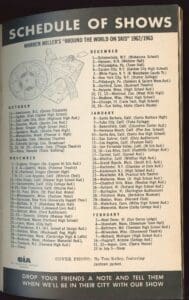
In film history, there’s a filmmaker who was more prolific than 99% of directors and more successful at cultivating an audience than just about any independent filmmaker. He made a movie a year for 50 years! And he spent 100 days on the road touring and exhibiting his films. Every single one of his movies ends with narration that says “I hope to see you next year, same time, same place.” And for 50 years he did. He’s no longer alive, but his company continues that legacy to this day and still fills theaters every fall.
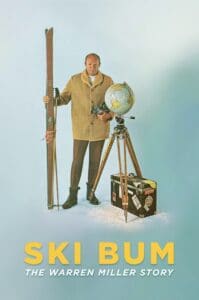
His name was Warren Miller. He’s not a name ever put next to Scorsese or Spielberg, but in the world of skiing, he is the godfather. And ultimately, Warren’s strengths were that he was a master of exhibition. He eventized his movies. He made them occasions for families. He had merchandise, rowdy in-person guests, intermissions, giveaways, you name it. I saw 2 Warren Miller movies as a kid in Denver (he was there at both). These were one-night-only packed house events held downtown at the historic Paramount Theater. He’d built a well oiled machine over decades. I learned everything there was to know about Warren when I worked on his biography documentary Ski Bum: The Warren Miller Story, which won the Audience Award at the 2019 Slamdance Film Festival and is now streaming on Amazon.
As I released Breakup Season I couldn’t help but think of Warren. I know he had a chip on his shoulder towards Hollywood because what he was doing never really fit into their mold. His movies more resemble showcases of skiing than a traditional story. Therefore, he’s not usually featured in film history classes. But Warren was a pioneer in terms of exhibition and distribution. And the future of indie film has more in common with Warren Miller than it does with A24 or Netflix. Warren’s method requires no gatekeepers, just a whole lot of sweat equity and relationship building. Warren built in-person experiences that were successful because people crave events. People want something they can do with their spouse, kids, or friends, that gets them out of the house and serves as a gathering place. He knew his audience and was consistent. He built a dedicated, reliable fanbase and cultivated it for 50 years.
As important as it is to study indie movies, it’s also worth studying Warren Miller. I believe his model and method is a clearer path towards sustainable independent filmmaking.
You can learn more about Warren Miller by watching Ski Bum: The Warren Miller Story.
 Part 6 (Conclusion): Self-Releasing Theatrical Runs Are the Future of Indie Film
The only way to be a successful independent filmmaker in 2026 and beyond sustainably is to think about exhibition with the same level of care that goes into production. As I gear up for my second feature film, this is already baked into the equation.
The myth of a distributor waiting at the end of the rainbow is over. It’s now about creating your own success. A tangible way to do this is incorporating a theatrical run to your process.
Inform your cast. Prepare your marketing assets. Identify independent theaters around the country, preferably in cities where you can plausibly build an in-person event. Lock in dates, build out a calendar. Barnstorm the local news outlets. Then hit the road. You can continue to pursue VOD outlets concurrently, these are not mutually exclusive. This effort will only add value to the eventual VOD run.
Welcome to the future of indie film. We’re taking back the theatrical experience. The venues need us and we need them. Jump in and join us!
If you have specific questions, contact me here.
(This is the final article in the case study series for Oregon Film. Many thanks to Tim Williams, Jane Ridley, and the Oregon Film Office for this platform. Long live indie film!)
